Tuesday, June 23, 2015

Moving Elements


The first moving element in this building is located on top of the bridge and gallery that work as a roof. It functions to shelter the people under it when rain and opens up when not needed to allow for more sunlight to comes in to the plants and surroundings


The second moving element works as a mirror that can reflect light from the sun towards the plants under it. It also functions to limit and control the amount of sunlight that comes and penetrates into the building.

36 textures


Article Mash-ups

Daylight and Open Space

In cities today, building has an intrinsic tendency of having uninterrupted openings in building facades and liberating the interior. Perhaps the separation of the exterior of the building and the use of daylight glazing from its steel-reinforced concrete allows natural light as a means of bringing nature into the home. As Le Corbusier mentioned to the design of domestic architecture, a strategy to integrate daylight into a building can reduce or increase its selective view of the surrounding environment.
Despite the freedom afforded by the development of this new design, the making of a high-performance building is at best a temporary material, where its combined resistance of tensile and compressive forces enables a prolific pioneer of the style. It must have the primary source of daytime illumination, the creation of a vegetal rooftop and space while increasing the views over the site. Moreover, if he were to see our modern cities, he would utilize the flat roof for a domestic garden to create a visually and thermally comfortable place connected to outdoor phenomena.
However, most importantly, day lighting does not corrode like metal and allowed for increased access to vast amounts of light, air, and space while creating a visually and thermally comfortable place connected to outdoor phenomena from the post and beam reinforced concrete structures within. In the practice of architecture, the exact positioning of the day light and windows support the influences of the order and regulation of classical architecture and open space.
Sources:
Article 1:
Article 2:
ARSENAULT, Hayley (2014) 5 Contemporary Buildings That Embody Le Corbusier's Five Points. Retrieved from: http://architizer.com/blog/5-buildings-that-embody-le-corbusiers-five-points/ (last accessed 24 May 2015)
Article 3
BROWNELL, Blaine (2015) Two Nautral Rebar Alternatives for Concrete. Retrieved from: http://www.architectmagazine.com/technology/two-natural-rebar-alternatives-for-concrete_o (last accessed 24 May 2015)


Saturday, May 9, 2015

Blacktown and its Aboriginal History

Brief Aborigine History in Blacktown

Aborigines are know to have lived in Australia for over 50,000 years and Blacktown is one of many places where evidences indicates the presences of Aborigines in the past. Campsites and shelters are often found along South Creek, Eastern Creek and many more. In Australia, Aborgines are known for their boomerangs and cultural art pattern which consists of dots and lines. Not only that, many trees are found removed for shield and dishes making. However, in the area of Blacktown, Aborigines are well known for making spears out of local trees and red silcrete stone which they obtained from the ridges above South and Eastern Creek.

The Triumph of Aboriginal History

To commemorate the history and culture of Aborigines in the Blacktown past, I decided to make a monument that closely related to their activities and culture. 


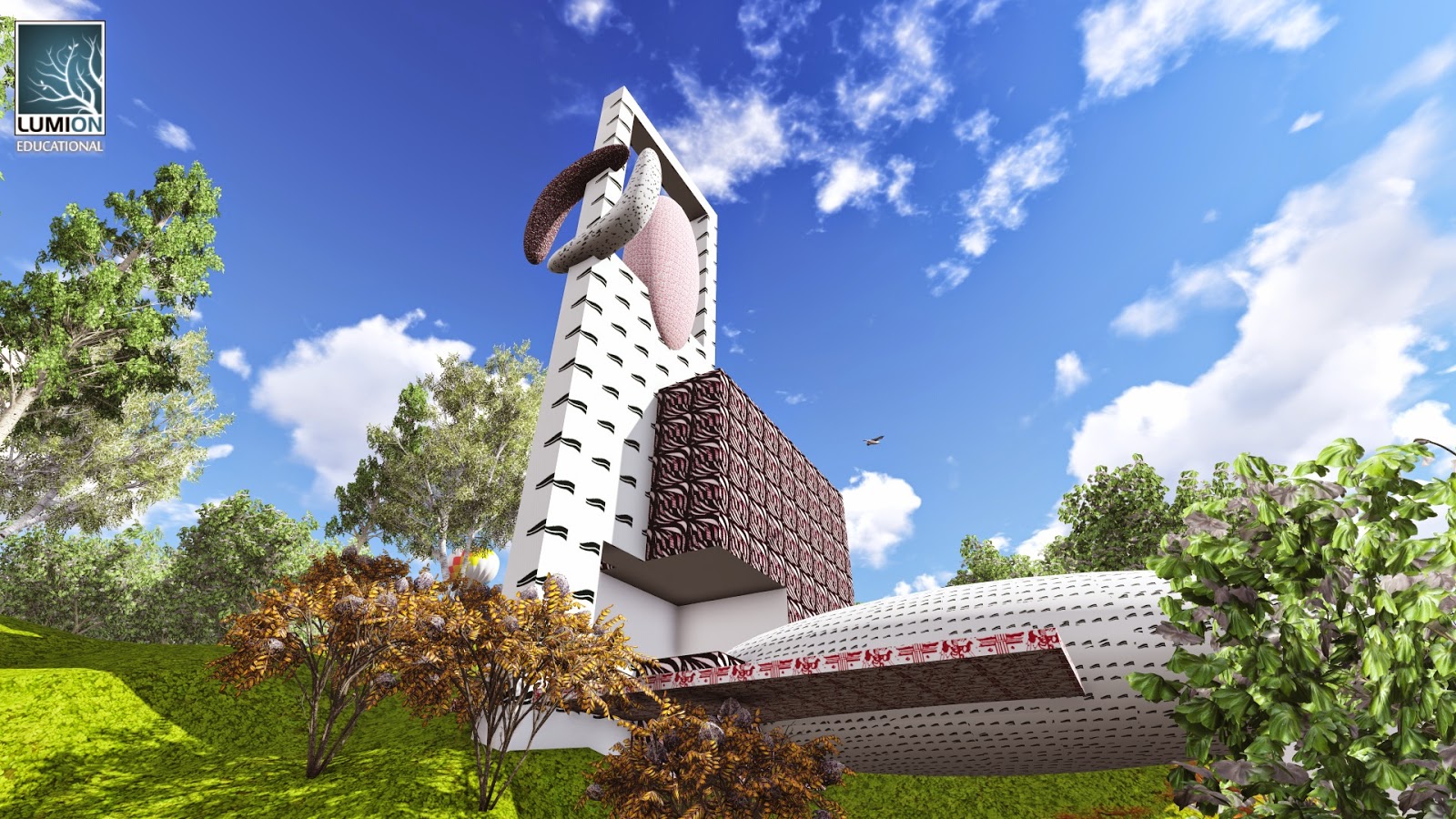
From the front view of the monument, I created the double boomerang monument, which also one of Blacktown famous icon of 2 boomerangs. They are distinct from each other in terms of color, which indicates the distinction of the past and present, as well as balance of dark, intrigued color and soft, light pattern. The big red stone indicates the red silcrete stone which the Aborigines used to create spear and the large container box with light pattern shows how the culture is preserved until now.


From above, we could see how the lager white stone is located next to the red surface square, showing how the aboriginal home (showed with white rock) is connected with the environment and their arts (showed with the chosen red medium colored pattern of aboriginal art).


From below, we could see the spaces inside that cutting through the 2 boxes, exemplifies how basic shelter as how Aborigines would have and the natural needs of home, from both past and present, both aboriginal history and the present sportspark.


From above, we could see the overall composition of the marker. It is located on between the bridge and the highway of the Sportspark, where it can be seen clearly from both direction of the travellers, to emphasis the use of monument as well as making it an icon, where it best remembered by everyone who pass by.


Last but not least, is the small details that is put into this monument. It's the lighting. The lamps are carefully positioned above the red silcrete rock from both sides of the cut-out box, to highlights the silcrete spear material, and one is put on top of the boomerang monument. It is also to highlights the boomerang that is used by the aborigines in the past. In conclusion, this monument is a tribute to Aborigines cultural heritage that have been passed on to us. Let's preserve it.

The Marker in Blacktown Site

Here are 5 pictures describing The Marker in Blacktown Site


Final Marker and 3 Chosen Patterns

Here is the chosen marker with artisan subdivision program being activated to one of the 2 5 blocks. The amalgamation of the two creates a unique symbol that represents Blacktown.

There is nothing in a caterpillar that tells you its going to be a butterfly
+
Love is metaphysical gravity
=
Evolution must start with love


3 Chosen Materials


Light- inspired mostly by Eliza Apartment building

Represents partly the hills and lands of Blacktown


Medium - inspired by Australian Traditional Pattern

Represents the connection of Aboriginal Art and Heritage to the present times of Blacktown

 Dark -  inspired by Zaha Hadid's Heydar Aliyev Center

Represents the nature surroundings and the partly dynamic composition of spears, traditional weapons of Aboriginal people in the past of Blacktown.

Electroliquid Aggregation